Os sons das cantigas: Popular religiosity in the 13th cantigas
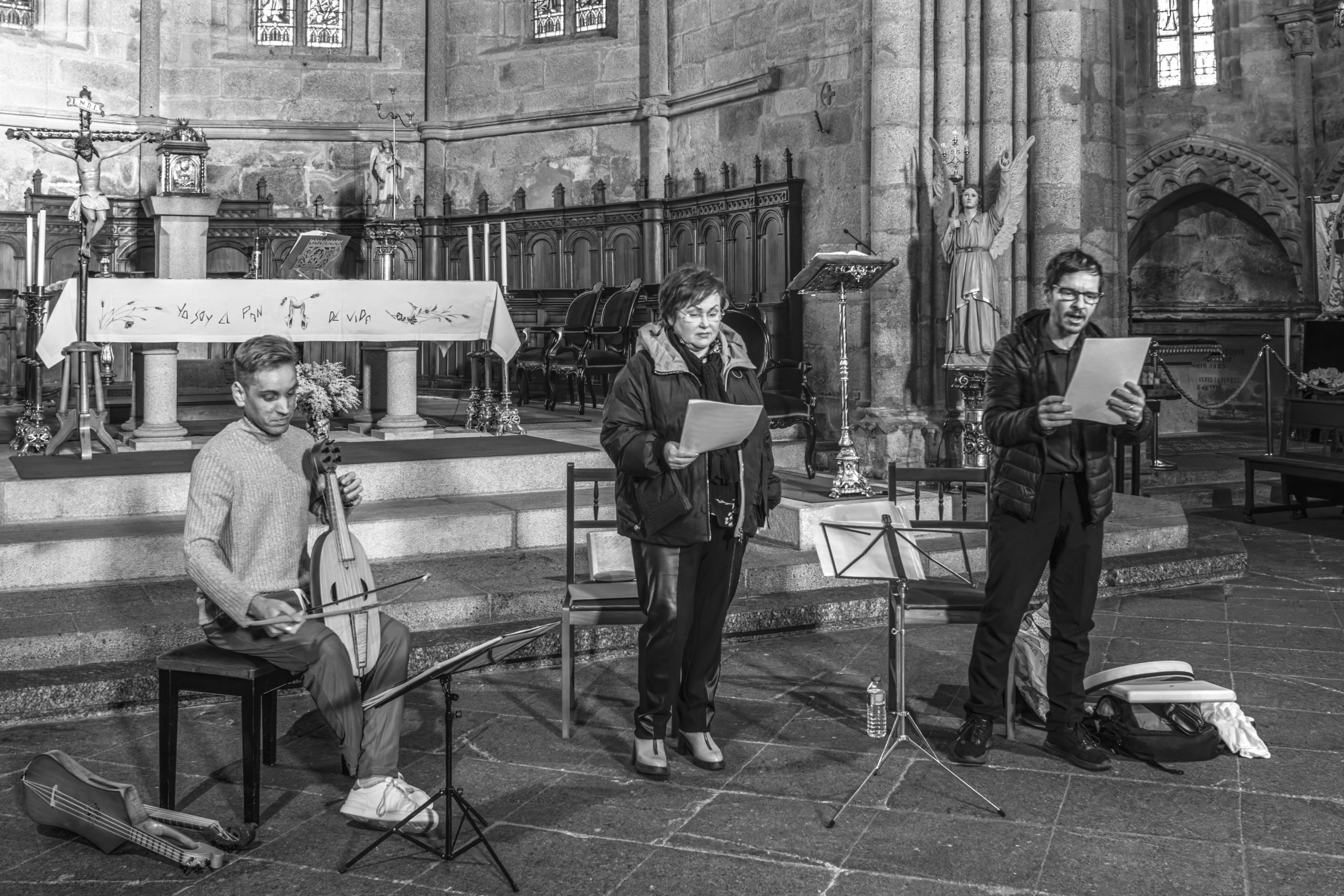
Members: Irina Bunkova, Xavier de Acosta, Henry Vidal.
Languages: Español, English, Gallego
Length: 60 Min.
Os sons das cantigas
The cantigas are a cornerstone of Iberian medieval lyric and a literary and linguistic jewel of Galicia and Portugal. From the twelfth century until their height in the thirteenth, these compositions elevated Galician‑Portuguese to a prestigious courtly language in Galicia, Portugal, and Castile, becoming the vehicle of a singular poetic tradition. Their genres range from the cantigas de amor and cantigas de amigo, with their lyricism and distinctive female voice, to the satirical cantigas de escarnio e maldecir, as well as the Cantigas de Santa María, which celebrate Marian devotion. This medieval lyric reflects a language rich in archaisms and musicality, blending the popular with the cultivated, and remains today a valuable testament to the Middle Ages.
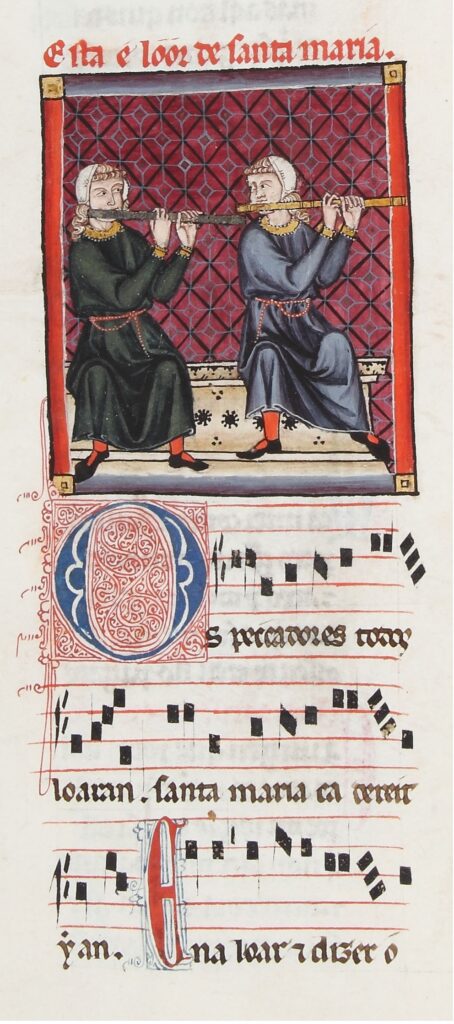
Commissioned and promoted by Alfonso X, they form one of the most important collections of Marian lyric in Galician‑Portuguese. This corpus, comprising more than four hundred cantigas, is organized into two main types: the miracle cantigas, which recount the Virgin Mary’s interventions in moments of danger or need, and the cantigas of praise, dedicated to honoring her. The work is one of the few medieval compilations that fuses poetry, music, and illumination, and its structure reveals a carefully crafted didactic and devotional purpose.
The Cantigas de Santa María draw inspiration from French works such as Gautier de Coincy’s Miracles de Notre Dame, yet Alfonso X adapts them to an Iberian framework, emphasizing a personal vision of the Virgin as intercessor and protector
of the kingdom.