
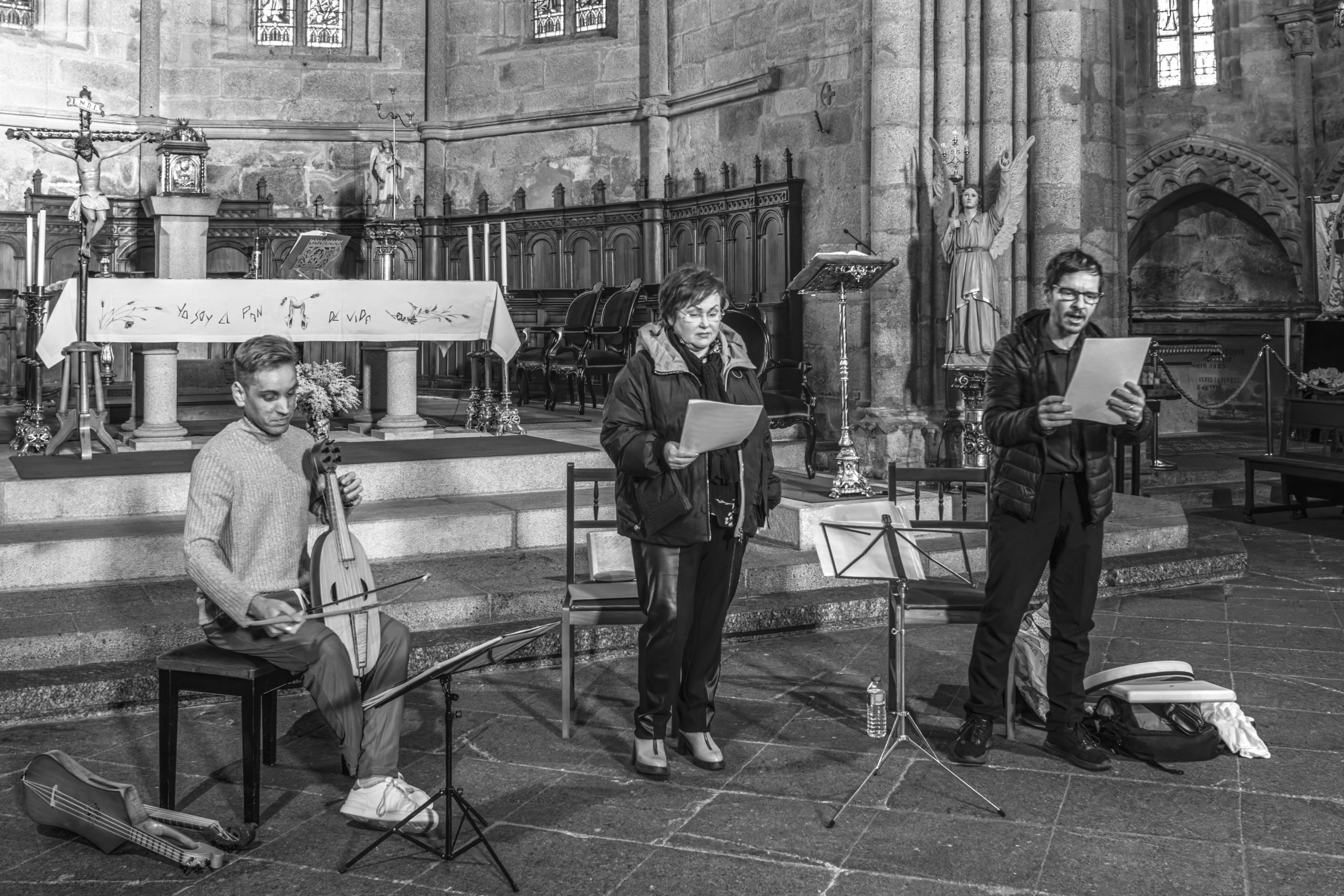
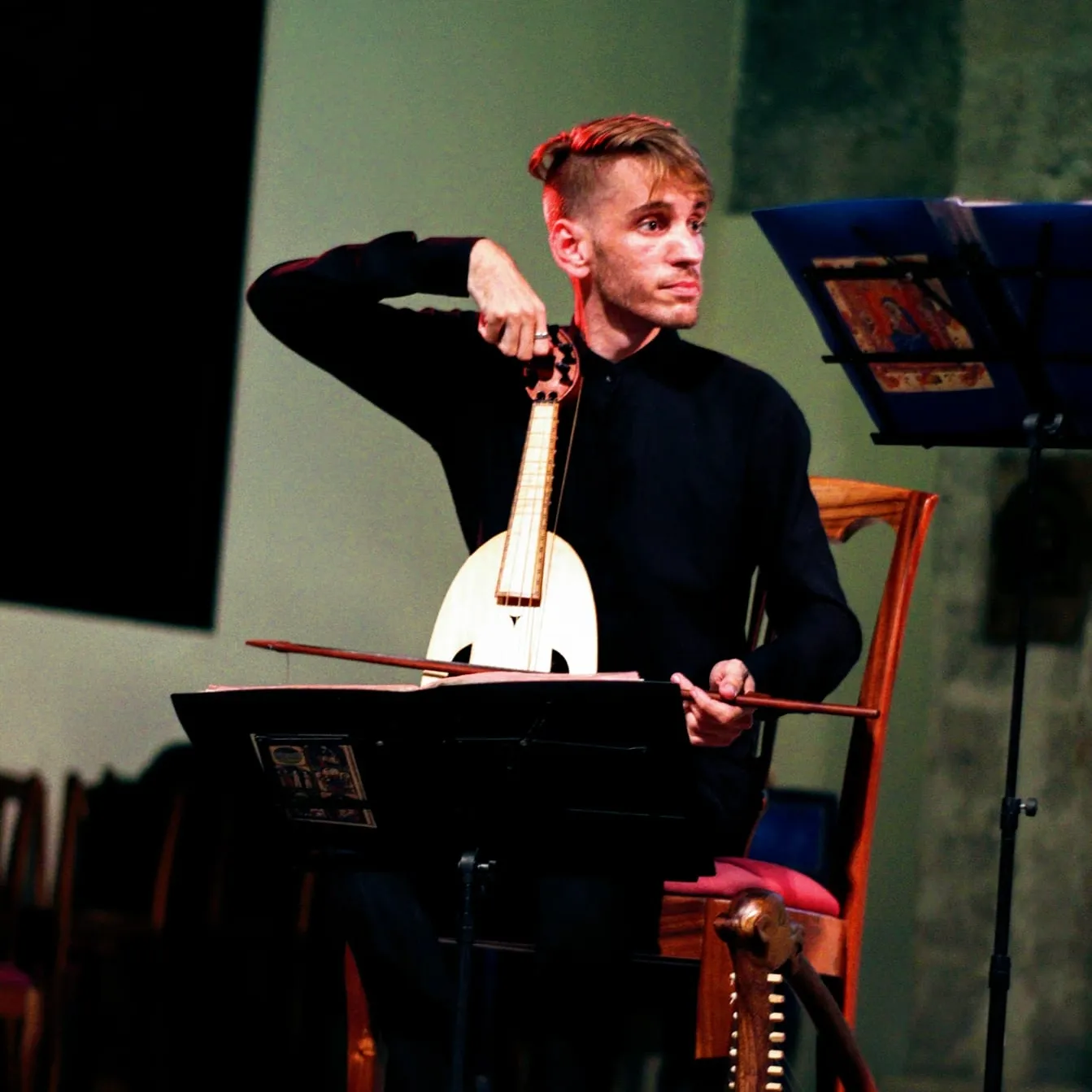
I am a performer specializing in early music, with a focus on the repertoire of the 11th to 13th centuries, particularly Galician-Portuguese lyric, the trouvère tradition, and Latin poetry from the Early Middle Ages. Through my work with Ensemble Lauda, which I founded in Havana in 2010 and is now based in Galicia, I aim to bring contemporary audiences closer to a poetic-musical universe that constitutes an invaluable yet often overlooked cultural heritage. The ensemble has developed a distinctive approach grounded in historically informed performance, combining music, poetry, and movement to recreate the medieval sound world through historically reconstructed instruments and interdisciplinary practice.
My dedication to medieval music is grounded in rigorous research of historical sources and a deep respect for the musical and poetic testimonies that have survived. My work includes the reconstruction of pieces that, although frequently fragmentary, reveal the sensibilities of an era in which music and poetry were inseparable.
I have collaborated closely with luthiers and musicologists who share this vision—such as Antonio Franco Carreira, John Pringle, and Yuri Terenyi—developing reconstructions of medieval string and wind instruments based on precise iconographic sources. My formation has also been shaped by key figures in the field of medieval music, particularly the singer and scholar Brigitte Lesne, whose work at the Centre de Musique Médiévale de Paris has been fundamental in my artistic development, as well as the musicologist Mauricio Molina, whose research has contributed to my understanding of medieval musical theory and practice. My training has also been enriched through specialized study in medieval music, including my participation as a student of Francisco Luengo in the course Os Sons dos Camiños (Lugo), where I deepened my engagement with historical sources and interpretative approaches.
With more than a decade of experience in medieval music performance, I have participated in festivals and academic events, presenting concerts, workshops, and lectures in collaboration with universities and Galician and Portuguese studies programs. Ensemble Lauda has been present at festivals and has developed projects that combine performance, research, and dissemination, including the creation of the event Habana Medieval, dedicated to medieval music and literature.
In these activities, I explore the connections between the social, historical, and religious contexts of the Middle Ages and their musical expressions, fostering a comprehensive understanding of this heritage. My work has been recognized for its rigorous research and interpretative depth, highlighting an approach that combines historical awareness with expressive vitality.
My discographic work reflects this academic and artistic commitment. In collaboration with the Dutch label Aliud Records, I released Cantigas de Santuarios (2020), a recording dedicated to the popular religiosity expressed in Galician-Portuguese lyric. The project stems from extensive research on sanctuaries in the cantigas de amigo, part of the 13th-century Galician troubadour corpus, and includes works by Martín Codax, Airas Nunes, Carpancho, Mendinho, Requeixo, among others. The recording reconstructs a specific subset of this repertoire, highlighting the symbolic and cultural significance of pilgrimage and devotional spaces within medieval lyric traditions.
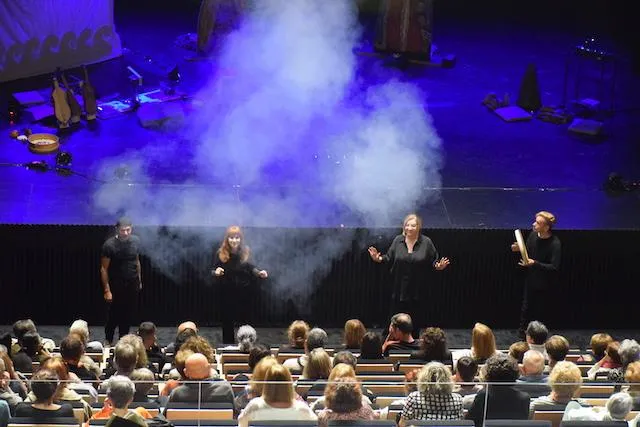
My artistic activity also extends into interdisciplinary and theatrical contexts, notably through my participation in the stage production Do reino (e) os amores proscritos, directed by Afonso Becerra, where medieval music is integrated into a contemporary dramaturgical framework, reinforcing the performative and expressive dimensions of historical reconstruction.
I understand performance as more than musical execution: it is an act of cultural and spiritual reconstruction. In each project, my goal is to open a window onto the past, reviving the voice of an era whose poetic and musical richness continues to resonate in our collective identity.